Montana’s nickname, Big Sky Country, leaves little room for exaggeration. Mountain ranges ring nearly every valley, and much of the state’s most striking scenery sits right at the water’s edge, whether that’s a glacier-carved lake or a river winding through open rangeland.
Paddlers here have plenty of options. Flathead Lake alone rivals a small sea, Glacier National Park hides some of the clearest alpine water in the country, and rivers like the Smith and the Missouri turn a single float trip into days of wilderness camping.
Not every trip needs to be an expedition, though. Plenty of these spots suit a quiet evening paddle with the family just as well as they suit a serious multi-day float, so there’s a fitting option whether you have an afternoon free or a full week.
Here are 10 of the best places to go kayaking in Montana, from the Flathead Valley to the Missouri Breaks.
1. Flathead Lake
- Location: Flathead Lake, Montana
- Best for: Wide-open water and basecamp-style trips
- Highlights: Wild Horse Island and views of the Mission Mountains
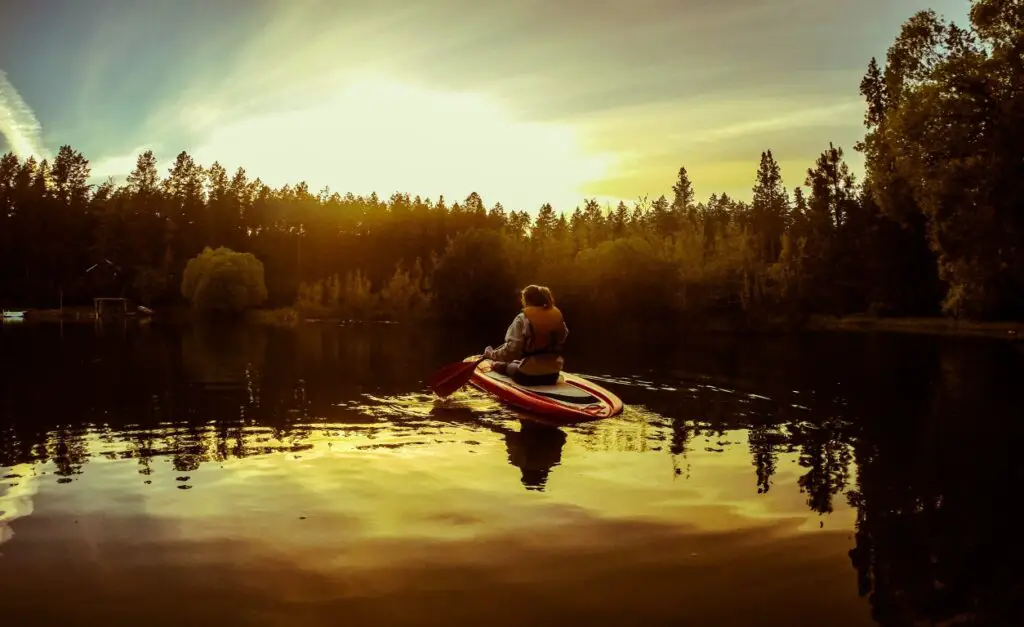
Flathead Lake is the largest natural freshwater lake west of the Mississippi, and paddling here feels closer to sea kayaking than a typical lake outing.
Public access sites include Somers Beach State Park (near Somers), Finley Point (near Polson), and Wayfarers State Park (near Bigfork). Guided tours are available, and several rental options are available if you didn’t bring your own kayaking gear.
The Mission Mountains rise dramatically along the eastern shore, making for one of the state’s most photographed backdrops. Paddle early in the morning if you can, since afternoon winds on Flathead’s open water tend to pick up by midday and can turn a calm paddle choppy fast.
2. Lake McDonald, Glacier National Park

- Location: Lake McDonald, Glacier National Park
- Best for: Scenic paddling paired with a national park visit
- Highlights: Colorful lakebed stones visible through crystal-clear water
Lake McDonald is the largest lake in Glacier National Park, and its glassy, jewel-toned water makes it one of Montana’s most scenic paddles. The lake sits right along Going-to-the-Sun Road, so it’s an easy add-on for anyone already visiting the park.
Because Glacier requires an aquatic invasive species inspection for any watercraft entering park waters, plan to stop at a check station before launching. Paddle close to shore near Sprague Creek for the best views of the lake’s famous colored stones, which are easiest to see on a calm, sunny day.
3. Swan Lake
- Location: Swan Lake, Montana
- Best for: Beginners and wildlife watchers
- Highlights: Loons, ospreys, and views of the Swan Range
Tucked into the Swan Valley between the Mission and Swan mountain ranges, Swan Lake is calmer and less crowded than its bigger neighbors. A small public access point located at the Swan Lake Campground and Day Use Area, near the community of Swan Lake, keeps the carry from car to water short.
Swan Lake’s marshy edges attract loons and other waterfowl, making it a good pick for paddlers who want wildlife sightings over open-water thrills. Early morning paddles here are usually the stillest, with mist still sitting on the water.
4. Holland Lake
- Location: Holland Lake, Montana
- Best for: Half-day trips with a scenic payoff
- Highlights: Sapphire-blue water backed by Holland Falls
Holland Lake sits at the base of the Swan Mountain Range, with the impressive Holland Falls waterfall visible from the water on clear days.
The lake is small enough to explore in a few hours, making it a convenient adventure for travelers without a full day to spare. Paddle to the far end of the lake for the clearest sightline to Holland Falls tumbling down the ridge above.
The historic Holland Lake Lodge overlooks the launch area. Although the lodge is currently only taking wedding and group bookings, it’s expected to open for drinks, dining, and lodging in 2027, so you can make the most of your time at Holland Lake. Check the lodge’s official website for updates before you travel.
5. Whitefish Lake
- Location: Whitefish Lake, Montana
- Best for: Families and evening paddles
- Highlights: Views of Whitefish Mountain Resort from the water
Whitefish Lake is a summer favorite for locals, with warm, swimmable water and a laid-back scene at City Beach. It’s ideal for families seeking a relaxing day on the water surrounded by breathtaking views.
Because it’s a popular lake with plenty of motorboat traffic, mornings tend to be the calmest window for kayaking, especially along the quieter northern shoreline away from the main beach. Or, paddle along the shoreline in the evening for views of the ski runs on Big Mountain catching the last light.
6. Seeley Lake
- Location: Seeley Lake, Montana
- Best for: Beginners and quiet, reflective paddling
- Highlights: Some of the clearest water in the Seeley-Swan corridor
Seeley Lake is known among Montanans for its resident population of common loons, and their calls carry easily across the water in the early morning. The lake’s clarity also makes it easy to spot fish and submerged logs from the surface as you glide over them, adding to the magic of your day on the water.
A public access site near the town of Seeley Lake offers a gentle, gradual launch that suits new paddlers, and paddling along the lily-pad-lined western edge is usually the best spot for a loon sighting.
7. Georgetown Lake
- Location: Georgetown Lake, Montana
- Best for: Anglers and casual paddlers
- Highlights: Mountain views toward the Pintler Range
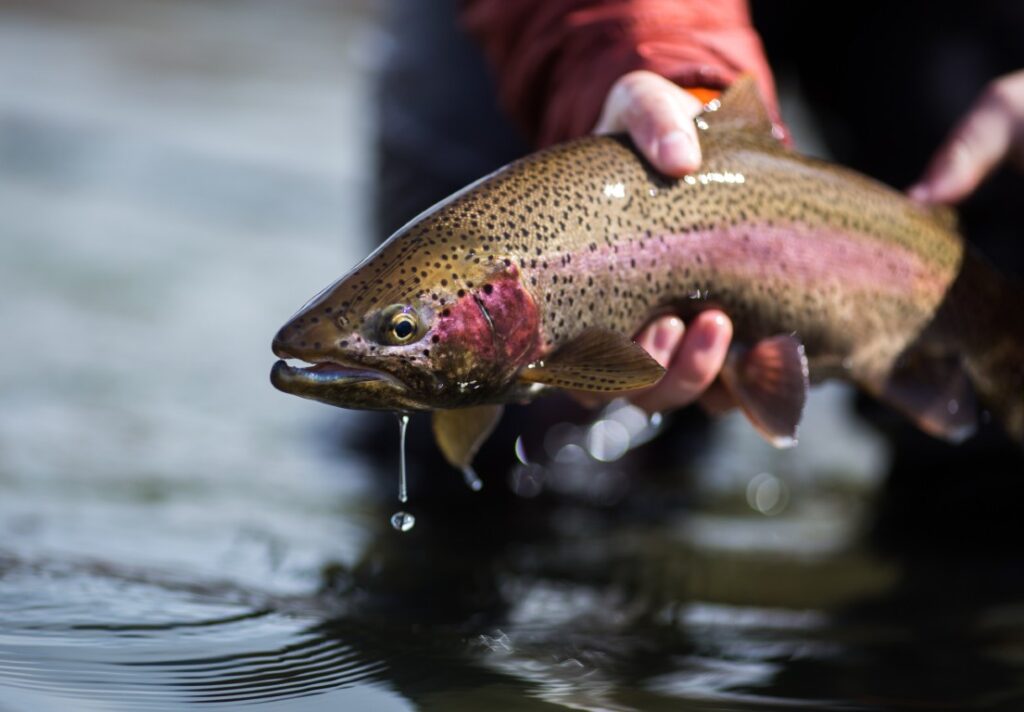
Georgetown Lake, located just outside Anaconda, is better known locally for its trout fishing than its scenery, but the two go hand in hand from a kayak.
Several public access points along the shoreline mean parking and launching rarely require much planning, and the lake’s higher elevation keeps the water noticeably cooler than valley lakes in late summer.
Whether you’re combining a fishing trip with some on-water enjoyment or you’re solely here for kayaking, Georgetown Lake’s calm, sheltered water and surrounding peaks make for an easy, low-stress adventure, even for first-timers.
8. Clark Fork River
- Location: Clark Fork River, Missoula
- Best for: Urban paddling and whitewater spectators
- Highlights: Brennan’s Wave whitewater park in the heart of downtown
The Clark Fork runs right through downtown Missoula, and Brennan’s Wave, a man-made whitewater feature alongside Caras Park, draws paddlers to Missoula’s whitewater kayaking scene all summer long.
Paddlers looking for a calmer float can put in upstream and drift past the university and riverfront trails instead. Or, those seeking challenging class III rapids should head to Alberton Gorge instead.
More of a spectator than a whitewater paddler? Watching from the riverbank near the park is nearly as fun as paddling it, since local kayakers use the wave to practice tricks most summer evenings.
Clark Fork is sometimes subject to safety advisories and closures, so check the official website for up-to-date conditions before you head down with your kayak.
9. Upper Missouri River
- Location: Upper Missouri National Wild and Scenic River
- Best for: Multi-day trips and history lovers
- Highlights: The White Cliffs formations that Lewis and Clark described in their journals
This stretch of the Missouri River is protected as a National Wild and Scenic River, and its largely calm, flat water suits multi-day canoe and kayak trips rather than a single afternoon paddle.
The dramatic white sandstone cliffs and sense of isolation are why this area is part of the Lewis and Clark National Historic Trail, and it will make you feel like you’re paddling through the same landscape that the trail’s namesakes once described in their 1805 journals.
Paddlers typically put in at Coal Banks Landing and take out 46 miles later at Judith Landing, camping along the riverbank in between. Plan on three to six days for the full stretch, and pack for changeable weather, since there’s little shade or shelter along most of the canyon.
10. Smith River
- Location: Smith River, Montana
- Best for: Experienced paddlers planning a multi-day wilderness trip
- Highlights: A limestone canyon reachable only by floating through it
The Smith River is one of Montana’s most sought-after paddling trips, and access is limited to a lottery-based permit system run by Montana Fish, Wildlife & Parks. The reward for planning ahead is a multi-day float through a remote limestone canyon with no road access once you put in.
Because permits are limited and competitive, most paddlers apply months in advance and treat a Smith River trip as a bucket-list event rather than a spontaneous outing. If your name isn’t drawn, keep an eye on the last-minute cancellation list, since spots do occasionally open up close to launch dates.
Which Montana Kayaking Spot Will You Paddle First?

Whether you’re after a lazy afternoon on Whitefish Lake or a bucket-list float down the Smith River, Montana has kayaking for nearly every kind of trip. Start with a spot close to your home base, then work up to the multi-day rivers once you’re ready for something bigger.
And if you’re continuing a Rocky Mountain road trip, Montana borders equally good rafting and paddling activities in Idaho and Wyoming, with Colorado worth the extra drive south. However you plan your trip, Big Sky Country looks best from the water.